Book Appointment Now
The Complete Oral Care Routine Guide for Every Family
Let me tell you something I notice every single week at my dental clinic in Indore. Patients walk in — from Vijay Nagar, Palasia, Bengali Square, Rajwada — all kinds of people, all age groups. And when I ask them about their oral care routine, I often hear the same things: “Main toh roz brush karta hoon, Doctor!” (I brush every day, Doctor!) And yet, there’s plaque buildup. There’s early gum disease. Sometimes there’s a cavity that’s quietly been growing for months.
The truth is, brushing alone is not enough. And the way most of us were taught to brush growing up? Often incorrect.
In my years of experience as a dentist in Indore, I’ve realized that most dental problems — cavities, gum disease, bad breath, sensitivity — are 100% preventable. All it takes is the right routine, the right information, and the discipline to follow through.
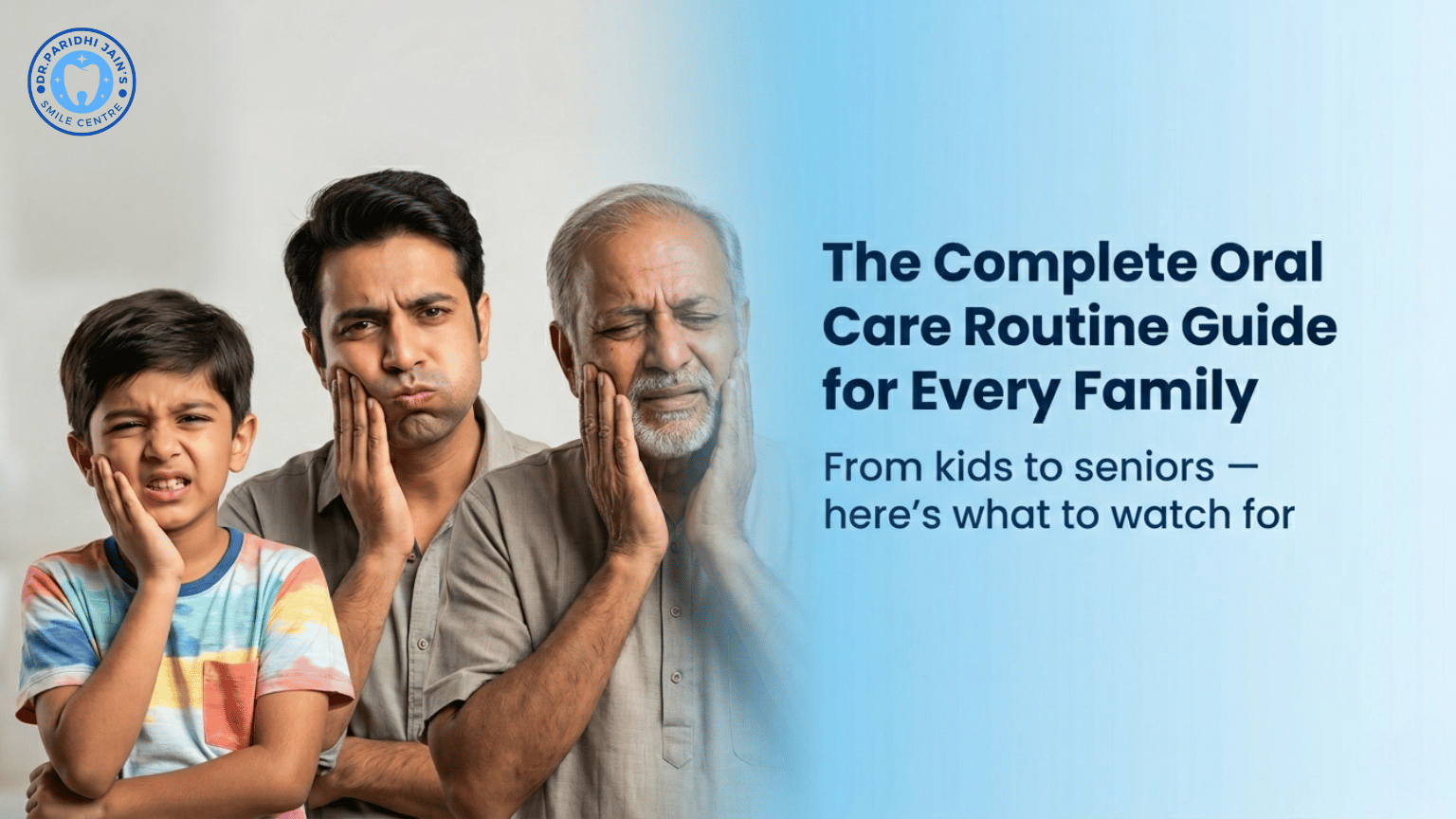
So I’ve written this guide specifically for families in Indore. Whether you’re a parent trying to build good habits in your kids, a working professional who barely has five minutes in the morning, or a senior looking after aging teeth — this guide is for you.
Let’s get into it.
Why Your Oral Health Is More Important Than You Think
Before we talk routines, I want you to understand why this matters beyond just having a nice smile.
Your mouth is the gateway to your body. Poor oral hygiene doesn’t just cause cavities — it’s been directly linked to:
-
- Heart disease — bacteria from infected gums can enter the bloodstream
-
- Diabetes complications — gum disease makes blood sugar harder to control
-
- Pregnancy risks — periodontal disease is linked to premature births
-
- Low self-confidence — bad breath and stained teeth affect social life and mental health
At Smile Centre Indore, patients often come to us thinking they just have a “tooth problem.” But what they actually have is a health problem that starts in the mouth.
Take care of your teeth, and you’re taking care of your whole body.
The Morning Oral Care Routine: What You Should Actually Be Doing
Most people wake up, brush quickly, rinse, and rush out the door. Here’s what that routine should really look like — step by step.
Step 1: Scrape Your Tongue First (Yes, Before Brushing)
This is the step almost everyone skips — and it’s one of the most important.
During sleep, your mouth produces less saliva, which means bacteria multiply rapidly on your tongue. When you wake up, that white or yellowish coating you see? That’s a bacterial film.
What to do: Use a tongue scraper (available at any pharmacy for ₹30–₹50) and gently scrape from back to front 5–7 times. Rinse and repeat.
This dramatically reduces morning bad breath and removes the bacteria before they spread during brushing.
Step 2: Brush Correctly — Technique Matters More Than Force
In my experience as a dentist in Indore, I see patients who brush hard enough to clean a floor tile — and it’s actually damaging their teeth and gums.
Here’s the right way:
-
- Use a soft-bristled toothbrush — never medium or hard
-
- Hold it at a 45-degree angle to your gumline
-
- Use gentle circular or short back-and-forth strokes — not horizontal scrubbing
-
- Brush for a full 2 minutes (use a timer — most people stop at 45 seconds!)
-
- Cover outer surfaces, inner surfaces, and chewing surfaces of all teeth
-
- Don’t forget your gum line — most cavities and gum problems start exactly there
Pro Tip from Dr. Paridhi Jain: Divide your mouth into 4 quadrants — upper right, upper left, lower right, lower left. Give each quadrant 30 seconds. This ensures you don’t rush through any section.
Step 3: Floss — Every Single Morning
I know. You’ve heard this before. And yet, fewer than 20% of Indians floss regularly.
Here’s why flossing is non-negotiable:
Your toothbrush cannot reach between teeth or below the gumline. That’s where 35% of your tooth surface lives. Skipping floss means 35% of your mouth never gets cleaned.
How to floss properly:
-
- Take about 18 inches of floss
-
- Wind most of it around your middle fingers, leaving 2 inches to work with
-
- Gently slide between teeth in a C-shape hugging each tooth
-
- Go just below the gumline (you’ll feel it — it shouldn’t hurt if done gently)
-
- Use a clean section of floss for each tooth gap
If you find flossing difficult, floss picks or water flossers (oral irrigators) are excellent alternatives and very popular with my patients at Smile Centre Indore.
The Night Oral Care Routine: The Most Important Routine You’re Probably Skipping
Patients at Smile Centre Indore often ask me: “Do I really need to brush at night if I brushed in the morning?”
Yes. Emphatically, yes.
Here’s why: saliva production drops significantly during sleep. Saliva is your mouth’s natural defense — it neutralizes acids, washes away food particles, and fights bacteria. Without it, bacteria that cling to teeth throughout the day have an 8-hour uninterrupted window to produce acids and cause decay.
Your night routine is arguably more important than your morning one.
The Complete Night Routine
1. Floss First (Yes, Before Brushing at Night Too)
Flossing at night removes food stuck between teeth before you brush — making brushing more effective.
2. Brush for 2 Full Minutes
Same technique as morning. Don’t rush this. You’re about to go 8 hours without saliva protection.
3. Use a Fluoride Toothpaste and Don’t Rinse After
This one surprises most people. After brushing at night, spit but don’t rinse. Leaving a thin film of fluoride toothpaste on your teeth overnight provides ongoing protection against decay.
4. If You Grind Your Teeth — Tell Your Dentist
Bruxism (teeth grinding during sleep) is extremely common and extremely damaging. If your partner says you grind your teeth, or you wake up with jaw soreness, please visit your family dentist. A custom night guard can save your teeth from serious, irreversible damage.
5. Oil Pulling
Oil pulling is an ancient Ayurvedic practice where you swish a tablespoon of coconut or sesame oil in your mouth for 5–10 minutes. It may help reduce harmful bacteria, improve bad breath, and support gum health. To do it at night, gently swish (don’t gargle), spit it out in a bin, and then proceed with your regular brushing and flossing routine. Remember, oil pulling is only a supportive add-on—not a replacement for proper oral hygiene—and scientific evidence is still limited.
The 7 Biggest Oral Care Mistakes I See in Indore (And How to Fix Them)
I’ve been practicing dentistry in Indore for years, and I see certain mistakes repeatedly. Let me save you from each of them.
❌ Mistake 1: Using a Hard-Bristled Brush “For Better Cleaning”
The truth: Hard bristles erode enamel and cause gum recession over time. This leads to permanent sensitivity that cannot be reversed without treatment. Always use soft bristles.
❌ Mistake 2: Brushing Immediately After Eating
After eating (especially acidic foods like imli, citrus, or tomatoes), your enamel is temporarily softened. Brushing immediately can wear it away faster. Wait at least 30 minutes after meals before brushing.
❌ Mistake 3: Not Changing Your Toothbrush Often Enough
Your toothbrush should be replaced every 3 months — or sooner if the bristles are fraying. A frayed brush cleans poorly and harbors bacteria. Also, always replace your brush after recovering from a cold or flu.
❌ Mistake 4: Rinsing the Toothpaste Off Immediately
As I mentioned — especially at night, don’t rinse immediately after brushing. The fluoride needs contact time to strengthen enamel.
❌ Mistake 5: Skipping Dental Checkups “Because Nothing Hurts”
This is a big one. Cavities don’t hurt until they’re deep. Gum disease is often painless in its early stages. By the time you feel pain, the problem is usually advanced — and treatment becomes more complex and expensive. Regular checkups every 6 months let us catch things early, when treatment is simple.
❌ Mistake 6: Using Teeth as Tools
Opening bottles, tearing packets, holding pins — I see the results of these habits regularly. Chipped teeth, cracked enamel. Your teeth are for eating and speaking. Use scissors.
❌ Mistake 7: Giving Kids Juice or Milk at Bedtime
This is something many parents in Indore don’t realize. Putting a child to sleep with a bottle of juice or milk (even breast milk) bathes their teeth in sugar for hours. This causes early childhood caries — a condition I see more often than I’d like. Water only after bedtime brushing.
Diet and Oral Health: What to Eat (and What to Avoid) in Indore
Food choices directly affect your teeth and gums. Here’s a practical guide relevant to Indian and specifically Indore-style eating habits.
Foods That Protect Your Teeth
-
- Dahi (Yogurt) — rich in calcium and probiotics, great for tooth enamel and gum health
-
- Paneer and milk — excellent calcium sources for tooth and bone strength
-
- Leafy greens (palak, methi) — high in calcium and folic acid; great for gum health
-
- Almonds and sesame seeds — calcium-rich, great snacking alternatives to sweets
-
- Amla (Indian gooseberry) — very high in Vitamin C, which strengthens gums
-
- Carrots and cucumbers — crunchy vegetables naturally scrub teeth and stimulate saliva
-
- Water — the most underrated dental health tool. It neutralizes acids and washes food away.
Foods and Habits to Limit
-
- Meetha and mithai — sugary sweets feed cavity-causing bacteria. Enjoy them at mealtimes rather than snacking throughout the day.
-
- Chai with extra sugar — many people in Indore sip sweet tea multiple times a day. Each sip creates an acid attack on teeth.
-
- Gutka, pan masala, and tobacco — I cannot stress this enough. These stain teeth severely, cause gum disease, and are a leading cause of oral cancer. If you use any of these, please speak to us.
-
- Cold drinks and soda — extremely acidic and high in sugar. A single glass creates an acid environment in your mouth for 20 minutes.
-
- Sticky foods (toffees, chikki) — cling to teeth and are difficult to clean off.
The 20-Minute Rule: Every time you eat or drink something other than water, your mouth enters an “acid attack” phase for about 20 minutes. Frequent snacking means your teeth are under continuous attack. Try to keep meals consolidated rather than grazing all day.
Oral Care for Kids: Building Habits That Last a Lifetime
As a dentist in Indore who sees patients of all ages, I can tell you — the habits formed in childhood last forever.
For Babies and Toddlers (0–2 years)
-
- Clean gums before teeth appear — use a damp cloth after feeds
-
- First tooth = first dentist visit — we recommend babies visit a dentist by their first birthday
-
- No bottles at bedtime — use water only after bedtime
-
- Introduce fluoride toothpaste as soon as the first tooth appears (a rice-grain-sized amount)
For Young Children (3–7 years)
-
- Brush for them until age 7 — kids don’t have the motor skills to do it effectively on their own before this
-
- Use a pea-sized amount of fluoride toothpaste
-
- Make brushing fun — let them pick their toothbrush, play a 2-minute song, use a timer app
-
- Fissure sealants — ask your family dentist in Indore about sealants for back teeth. These protective coatings prevent cavities in grooves where brushing can’t reach.
Also read – Why a Child’s First Dental Visit Is Important for Oral Health
- Fissure sealants — ask your family dentist in Indore about sealants for back teeth. These protective coatings prevent cavities in grooves where brushing can’t reach.
For Older Kids and Teenagers (8–17 years)
-
- Introduce flossing as soon as two teeth touch
-
- Watch out for braces care — fixed orthodontic appliances create many new spots for plaque to hide. Extra brushing time and special floss threaders are essential.
-
- Discuss the dangers of tobacco and caffeinated drinks early — peer pressure in school can start young
Smile Centre Indore offers specialized Pedodontics (Children’s Dentistry) with a friendly, gentle approach that makes kids feel comfortable and safe. [Book your child’s first dental visit →]
Oral Care for Adults: Your 30s, 40s, and 50s
This is the stage of life where life gets busy — work, family, stress — and dental health quietly takes a back seat.
In my experience as a dentist in Indore, adults in this age group most commonly present with:
-
- Gum disease (gingivitis or periodontitis) — often due to years of missed flossing
-
- Teeth sensitivity — from enamel erosion or gum recession
-
- Teeth grinding (bruxism) — especially common in high-stress professions
-
- Yellowing and staining — from tea, coffee, tobacco
Key Recommendations for Adults:
-
- Don’t ignore bleeding gums — this is NOT normal. Gums should not bleed with gentle brushing. Bleeding is usually an early sign of gingivitis, which is completely reversible with treatment.
-
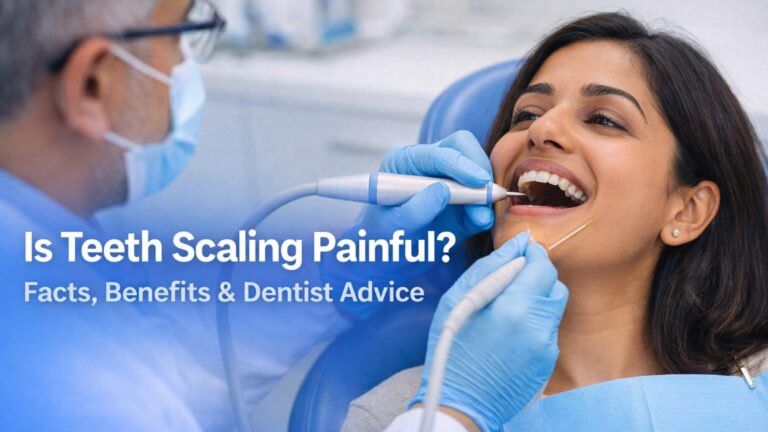
- Get a professional scaling (teeth cleaning) every 6 months. No amount of home brushing removes hardened tartar — only professional ultrasonic cleaning does.
-
- Consider tooth whitening if staining affects your confidence. At Smile Centre Indore, we offer safe, clinic-supervised whitening treatments.
-
- If you smoke or use tobacco — oral cancer screenings should be part of every checkup. Early detection is life-saving.
[Explore our Dental Services for Adults at Smile Centre Indore →] https://smilecentreindore.com/contact/
Oral Care for Senior Citizens: 60 Years and Beyond
Aging brings specific dental challenges that aren’t talked about enough.
Patients at Smile Centre Indore who are 60+ often deal with:
-
- Dry mouth (xerostomia) — many common medications (for blood pressure, diabetes, etc.) reduce saliva production. Without saliva, decay risk skyrockets. Ask your dentist about saliva substitutes and mouth rinses designed for dry mouth.
-
- Gum recession — exposing root surfaces that are not protected by enamel and decay very quickly
-
- Missing teeth and dentures — improper denture hygiene is a leading cause of oral fungal infections
-
- Arthritis — making it difficult to hold and manipulate a toothbrush. Electric toothbrushes are life-changing for seniors with joint problems.
Special Tips for Seniors:
-
- Electric toothbrushes — recommended for anyone with limited hand mobility
-
- Fluoride mouth rinses — extra protection for exposed root surfaces
-
- Denture care — clean dentures every day with a denture brush; never sleep with them in; soak overnight in a denture cleaning solution
-
- Stay hydrated — drinking more water helps compensate for reduced saliva
When Should You Visit a Dentist? (Don’t Wait for Pain)
One of the most important messages I can give you as a dentist in Indore: don’t wait until something hurts.
Visit a dentist immediately if you notice:
-
- Bleeding gums when brushing or eating
-
- Persistent bad breath despite good hygiene
-
- Tooth sensitivity to hot, cold, or sweet
-
- Any sore, ulcer, or white/red patch in your mouth that doesn’t heal in 2 weeks
-
- Loose teeth (in adults — this is never normal)
-
- Jaw pain, clicking, or difficulty opening/closing
-
- Any visible holes or dark spots on teeth
-
- Swelling in gums or face
Routine visits — even when nothing hurts: Every 6 months for most people. Every 3–4 months if you have gum disease or high cavity risk.
Why Patients from Across Indore Choose Smile Centre Indore
At Smile Centre Indore, we serve patients from Vijay Nagar, Palasia, Bengali Square, Rajwada, and many nearby areas across Indore. We understand the local community, the local lifestyle, and the specific dental challenges that people in our city face.
What we offer:
-
- Complete Family Dentistry — from toddlers to grandparents
-
- Preventive Dental Care — cleanings, checkups, fluoride treatments, sealants
-
- Restorative Treatments — fillings, crowns, bridges, implants
-
- Cosmetic Dentistry — teeth whitening, veneers, smile makeovers
-
- Orthodontics — braces and clear aligners for all ages
-
- Children’s Dentistry (Pedodontics) — gentle, friendly, and effective
-
- Gum Disease Treatment — scaling, root planing, and periodontal care
-
- Emergency Dental Care — because tooth pain doesn’t follow a schedule
Our approach is simple: honest advice, gentle treatment, lasting results.
FAQ: Your Oral Health Questions Answered by Dr. Paridhi Jain
Q1: How many times a day should I brush my teeth? Twice daily — once in the morning and once before bed at night. Brushing after lunch is a bonus, but wait at least 30 minutes after eating.
Q2: Is it okay to use charcoal toothpaste for whitening? I generally don’t recommend charcoal toothpaste for regular use. While it may provide some surface whitening, it can be abrasive enough to damage enamel over time. For safe whitening, consult your dentist about professional whitening options.
Q3: My child is 4 years old and still has all milk teeth. Do they really need a dental visit? Absolutely yes. Milk teeth are critically important — they hold space for permanent teeth and affect your child’s speech and nutrition. Problems with milk teeth, left untreated, can impact permanent teeth underneath. Bring your child to our dental clinic in Indore for their first checkup today.
Q4: I have sensitive teeth. What can I do? Sensitivity is usually caused by exposed dentinal tubules — from enamel erosion, gum recession, or over-brushing. Use a desensitizing toothpaste (like Sensodyne). But more importantly, see your dentist to identify the cause — because sensitivity can also be a sign of a cavity or cracked tooth that needs treatment.
Q5: How often should I get a professional teeth cleaning (scaling)? For most people, every 6 months. If you have active gum disease, your dentist may recommend every 3–4 months until it’s under control.
Q6: Is teeth whitening safe? Professional teeth whitening, done at a dental clinic under supervision, is safe and effective. Over-the-counter whitening strips used incorrectly can damage gums and cause uneven results. At Smile Centre Indore, we offer safe, customized whitening treatments.
Q7: My gums bleed when I brush. Should I brush less? No — brush better. Bleeding gums are usually a sign of gingivitis (early gum disease) caused by plaque buildup. Brushing less will make it worse. Use a soft brush, brush gently but thoroughly, floss daily, and see your dentist. Gingivitis is completely reversible with professional treatment and good home care.
Q8: What is the right age for braces? Orthodontic assessment is ideal around age 7, when we can identify developing bite problems early. Active treatment typically begins between 10–14 years, though adult braces and clear aligners are also very effective. Visit our dental clinic in Indore for a free orthodontic consultation.
Q9: Can poor oral health really affect my heart? Yes. There is strong scientific evidence linking gum disease bacteria to cardiovascular disease. The bacteria enter the bloodstream through inflamed gums and can contribute to arterial inflammation and heart problems. Keeping your gums healthy is genuinely heart-healthy.
Q10: I’m from Palasia / Vijay Nagar / Bengali Square — is Smile Centre Indore easy to reach? Yes! We are conveniently located and easily accessible from all major areas of Indore including Vijay Nagar, Palasia, Bengali Square, Rajwada, and surrounding localities. Call us or visit our website to get directions and book your appointment.
Book Your Appointment at Smile Centre Indore Today
Your smile deserves expert care — not just when something hurts, but as part of your everyday health routine.
Whether you need a routine checkup, a professional cleaning, treatment for a dental problem, or simply want to learn more about caring for your teeth at home — Dr. Paridhi Jain and the team at Smile Centre Indore are here for you and your entire family.
📞 Ready to Book? Here’s How:
-
- Call / WhatsApp: 6262218187
-
- Visit: Smile Centre Indore — serving patients from Vijay Nagar, Palasia, Bengali Square, Rajwada, and all nearby areas
-
- Book Online: smilecentreindore.com
“In my experience as a dentist in Indore, the patients who invest in prevention always spend less, suffer less, and smile more. Your oral health journey starts with one appointment — let’s begin today.” — Dr. Paridhi Jain, Smile Centre Indore
Related Reads on Smile Centre Indore:
Smile Centre Indore | Best Dentist in Indore | Family Dental Clinic | Vijay Nagar | Palasia | Bengali Square | Rajwada | Indore, Madhya Pradesh