Book Appointment Now

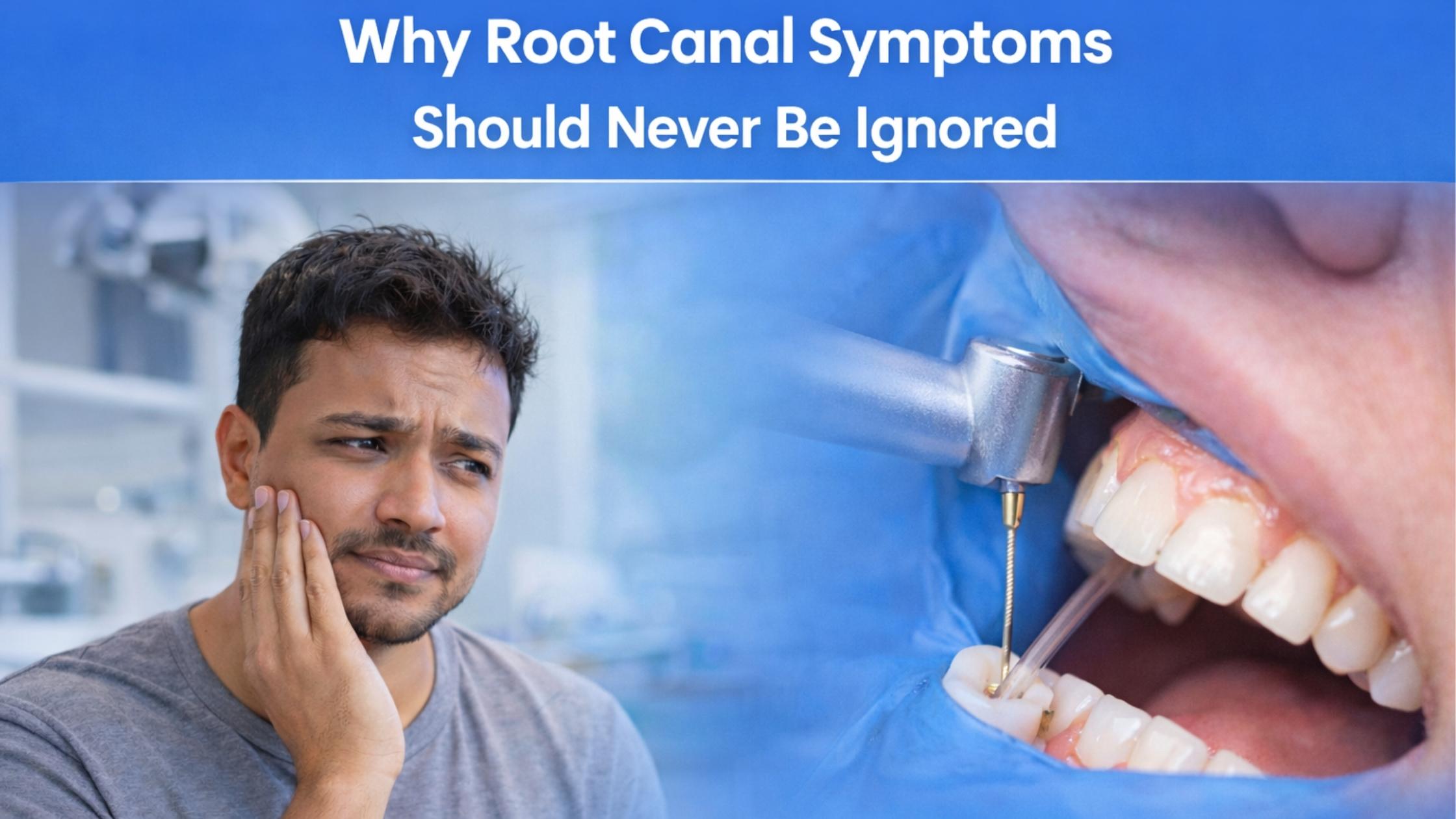
Why Root Canal Symptoms Should Never Be Ignored
Many people feel scared when they hear the words “root canal treatment.” Because of fear or confusion, they often ignore early symptoms and delay visiting a dentist. Unfortunately, this delay can turn a simple dental problem into severe pain, infection, and even tooth loss.
A root canal treatment is not something to fear—it is actually a procedure that relieves pain and saves your natural tooth. The key is recognizing the warning signs early.
In this blog, we will explain clear signs that indicate you may need a root canal treatment, in the simplest way possible.
What Is Root Canal Treatment?
A root canal treatment is a dental procedure used to treat infection inside the tooth. Inside every tooth is a soft tissue called pulp, which contains nerves and blood vessels.
When this pulp becomes infected due to deep decay, cracks, or injury, it causes pain and swelling. Root canal treatment removes the infected pulp, cleans the tooth, and seals it to prevent further infection.
Why Root Canal Problems Start
Root canal problems usually begin due to:
- Deep cavities
- Repeated dental fillings
- Cracked or broken teeth
- Trauma or injury to the tooth
- Untreated tooth decay
If not treated on time, the infection spreads to the jawbone and gums.
Major Signs You Need Root Canal Treatment
1. Severe Tooth Pain While Chewing or Biting
One of the most common signs is sharp or throbbing pain while chewing. This pain does not go away easily and often gets worse with pressure.
If biting on food causes intense pain, it may indicate infected tooth pulp.
2. Continuous or Lingering Tooth Pain
Pain that:
- Lasts for several hours
- Comes back again and again
- Gets worse at night
is a strong warning sign. Unlike mild sensitivity, this pain does not disappear on its own.
3. Sensitivity to Hot and Cold That Lasts Long
If your tooth hurts after drinking hot tea or cold water—and the pain lingers for many minutes—it could mean nerve damage inside the tooth.
Normal sensitivity disappears quickly. Lingering sensitivity is not normal.
4. Swollen or Tender Gums Near a Tooth
Swelling around a particular tooth often indicates infection. You may notice:
- Puffy or red gums
- Pain when touching gums
- A small pimple-like bump (abscess)
This is a serious sign and requires immediate dental attention.
5. Darkening or Discoloration of Tooth
A tooth that turns grey, brown, or darker than others may have dead or damaged nerve tissue. This happens when the blood supply to the tooth is cut off.
Discolored teeth often need root canal treatment to stop infection.
6. Pus Formation or Bad Taste in Mouth
If you notice:
- Pus discharge
- Bad taste that does not go away
- Persistent bad breath
it usually means there is an infection inside the tooth or gums. This condition should never be ignored.
7. Tooth Feels Loose
An infected tooth may feel slightly loose due to damage to the surrounding bone. This happens when infection spreads beyond the tooth root.
Early treatment can still save the tooth.
8. Pain That Spreads to Jaw, Ear, or Head
Root canal pain does not always stay in one place. Sometimes it spreads to:
- Jaw
- Ear
- Head or temple
This radiating pain often confuses patients but strongly points to nerve infection.
Can Root Canal Be Needed Without Pain?
Yes. In some cases:
- The nerve is already dead
- Pain may reduce temporarily
- Infection continues silently
This is why regular dental checkups are important, even without pain.
What Happens If You Delay Root Canal Treatment?
Delaying treatment can lead to:
- Severe infection
- Abscess formation
- Jawbone damage
- Tooth extraction
- Spread of infection to other teeth
Root canal treatment saves your tooth—extraction removes it forever.
How Is Root Canal Treatment Performed?
Modern root canal treatment is safe and comfortable.
Steps include:
- Local anesthesia (numb the area)
- Removal of infected pulp
- Cleaning and disinfecting canals
- Filling and sealing the tooth
- Placing a crown (if needed)
Most patients feel relief, not pain, after treatment.
Is Root Canal Treatment Painful?
This is the biggest myth.
Truth:
- The procedure is mostly painless
- Modern anesthesia ensures comfort
- Pain reduces significantly after treatment
Root canal treatment removes pain—it does not cause it.
Root Canal Treatment Cost in Indore
The cost depends on:
- Tooth type (front or molar)
- Severity of infection
- Need for crown
Early treatment is always more affordable than delayed care or extraction.
When Should You Visit a Dentist in Indore?
Visit a dentist immediately if you notice:
- Persistent tooth pain
- Swelling or pus
- Sensitivity that lasts long
- Discolored tooth
- Pain while chewing
Early diagnosis saves time, money, and your natural tooth.
Frequently Asked Questions (FAQs)
Q1. Can antibiotics cure root canal infection?
No. Antibiotics reduce symptoms temporarily but do not remove infected pulp.
Q2. How long does root canal treatment take?
Usually 1–2 sittings, depending on infection severity.
Q3. Can I avoid root canal if pain stops?
No. Pain stopping may mean nerve death, not healing.
Q4. Is tooth extraction better than root canal?
Saving your natural tooth with root canal is always better than extraction.
Book Root Canal Consultation in Indore
If you notice any signs mentioned above, do not delay treatment.
Smile Centre by Dr. Paridhi Jain
Genesis Cosmetology, E-86, LIG Link Rd, Shree Nagar Ext, Pushpa Nagar, Anurag Nagar, Indore – 452011
Call: 062622 18187
Website: https://smilecentreindore.com
5.0 rating | 31 Google reviews
Open till 8 PM
Early root canal treatment can save your tooth and end pain permanently.