Book Appointment Now

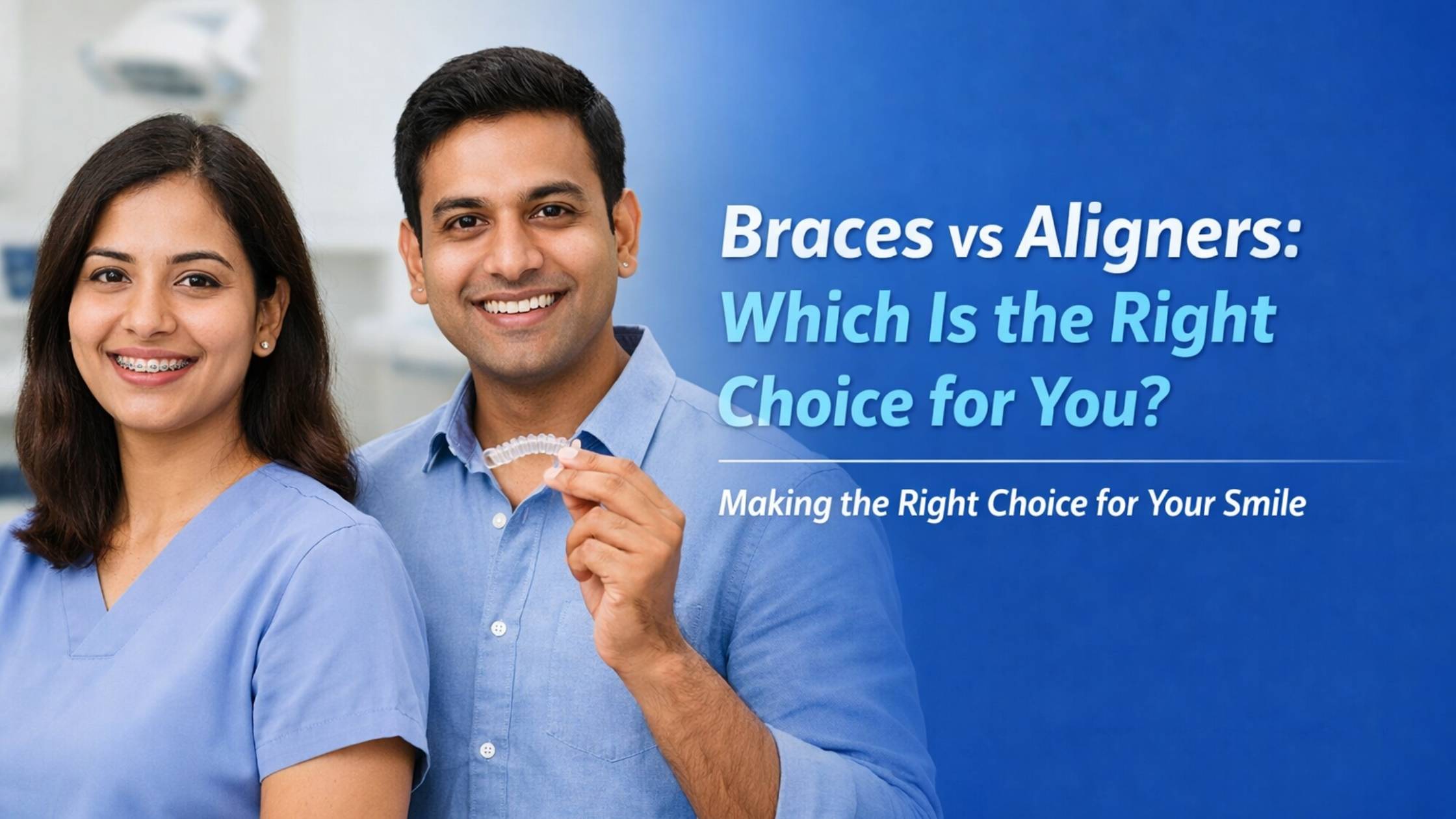
Braces vs Aligners: Which Is the Right Choice for You?
Making the Right Choice for Your Smile
Crooked teeth, gaps between teeth, or bite problems are very common dental concerns among children, teenagers, and adults. These problems do not just affect appearance; they can also cause difficulty in chewing, speech problems, jaw pain, and poor oral hygiene.
Thanks to modern dentistry, straightening teeth is now easier and more comfortable than ever. Today, patients usually have two popular orthodontic treatment options:
Braces and Clear aligners
Many patients in Indore often ask:
“Which is better — braces or aligners?”
The truth is, there is no one-size-fits-all answer. The best option depends on your dental condition, age, lifestyle, comfort preference, and budget. In this guide, we explain everything clearly so you can make an informed decision with confidence.
What Are Braces?
Braces are fixed orthodontic devices that are attached directly to your teeth. They are made of metal, ceramic, or tooth-colored materials. Brackets are bonded to the teeth and connected using wires, which apply gentle pressure to move teeth into the correct position over time.
Braces have been used safely for decades and are known for their strength, reliability, and ability to treat complex dental problems.
Types of Braces
- Metal braces
- Ceramic braces
- Tooth-colored braces
Each type works in a similar way, with differences mainly in appearance and cost.
What Are Aligners?
Aligners are clear, removable plastic trays that fit snugly over your teeth. They are almost invisible and are custom-made using digital 3D scans of your teeth.
Aligner treatment involves wearing a series of trays, each designed to move your teeth slightly until they reach the desired alignment.
Aligners are especially popular among adults and professionals because they are discreet and comfortable.
How Do Braces and Aligners Work?
How Braces Work
- Brackets are bonded to each tooth
- Wires connect the brackets
- The dentist adjusts the wires periodically
- Continuous pressure moves teeth gradually
Because braces are fixed, they work 24/7 without patient effort.
How Aligners Work
- Teeth are scanned digitally
- A series of aligners is created
- Aligners are worn 20–22 hours per day
- Each set is changed every 1–2 weeks
Aligners work only when worn consistently.
Key Differences: Braces vs Aligners
| Feature | Braces | Aligners |
|---|---|---|
| Visibility | Clearly visible | Almost invisible |
| Removable | No | Yes |
| Comfort | Initial discomfort | Generally more comfortable |
| Cleaning | Requires extra effort | Easy (remove while brushing) |
| Food Restrictions | Yes | No |
| Treatment Range | Mild to severe cases | Mild to moderate cases |
| Discipline Required | Low | High |
When Braces Are the Better Choice
Braces are often recommended in the following situations:
1. Complex Tooth Movements
Braces are ideal for:
- Severe crowding
- Impacted teeth
- Rotated or twisted teeth
- Large gaps
They provide better control for complicated cases.
2. Bite Problems
Braces are more effective for correcting:
- Overbite
- Underbite
- Crossbite
- Open bite
These conditions often need strong and precise tooth movement.
3. Children and Teenagers
Braces are commonly used for younger patients because:
- They do not depend on discipline
- Teeth and jaws are still developing
- Results are predictable
4. No Risk of Forgetting
Since braces are fixed, you don’t need to remember to wear them. This makes them suitable for patients who may forget aligners.
When Aligners Are the Better Choice
Aligners are often preferred when:
1. You Want Discreet Treatment
Aligners are nearly invisible, making them ideal for:
- Working professionals
- College students
- Public-facing roles
2. You Want Easier Oral Hygiene
Because aligners are removable:
- Brushing and flossing is easier
- Risk of cavities is lower with good care
3. No Food Restrictions
You can remove aligners while eating, so:
- No restriction on hard or sticky foods
- Easier lifestyle management
4. Mild to Moderate Alignment Issues
Aligners work best for:
- Slight crowding
- Minor gaps
- Mild bite issues
Comfort and Lifestyle: What to Expect
With Braces
- Mild soreness after adjustments
- Wires may irritate cheeks initially
- Food can get stuck
- Requires careful cleaning
With Aligners
- Smooth plastic feels more comfortable
- Temporary speech changes possible
- Must be worn consistently
- Easy daily maintenance
Most patients adapt within a few days.
Cost Comparison: Braces vs Aligners in Indore
The cost of orthodontic treatment in Indore depends on complexity, treatment duration, and type of appliance used.
Approximate Cost Ranges (Indicative)
| Treatment Type | Approximate Cost |
|---|---|
| Metal Braces | ₹25,000 – ₹60,000 |
| Ceramic Braces | ₹40,000 – ₹80,000 |
| Clear Aligners | ₹60,000 – ₹1,20,000 |
Exact cost varies by case and clinic.
Treatment Duration
| Treatment | Average Duration |
|---|---|
| Braces | 18–36 months |
| Aligners | 12–24 months |
More complex cases may require longer treatment.
Oral Hygiene and Maintenance
Braces Care
- Brush after every meal
- Use interdental brushes
- Avoid sticky and hard foods
- Regular dental visits
Aligners Care
- Brush teeth before wearing aligners
- Clean aligners daily
- Avoid eating with aligners
- Wear at least 20 hours/day
Good hygiene prevents cavities and gum problems during treatment.
Common Myths About Braces and Aligners
“Aligners work faster than braces”
Not always. Speed depends on the complexity of tooth movement.
“Braces are extremely painful”
Discomfort is temporary and manageable.
“Aligners don’t work”
Aligners are clinically proven when used correctly.
Which Option Should You Choose?
The right choice depends on:
- Severity of dental problem
- Lifestyle and appearance preference
- Budget
- Discipline and consistency
A professional dental evaluation is the best way to decide.
When to Visit a Dentist in Indore for Orthodontic Treatment
Visit a dentist if you notice:
- Crooked or overlapping teeth
- Gaps between teeth
- Bite problems
- Jaw pain or clicking
- Difficulty chewing
Early treatment gives better results and prevents future issues.
Frequently Asked Questions (FAQs)
Q1. Do braces hurt?
Mild discomfort may occur initially but fades quickly.
Q2. Are aligners noticeable?
No, they are nearly invisible.
Q3. Can I remove aligners while eating?
Yes, but they must be worn at least 20 hours daily.
Q4. Which option is faster?
Treatment time depends on individual dental needs.