Book Appointment Now
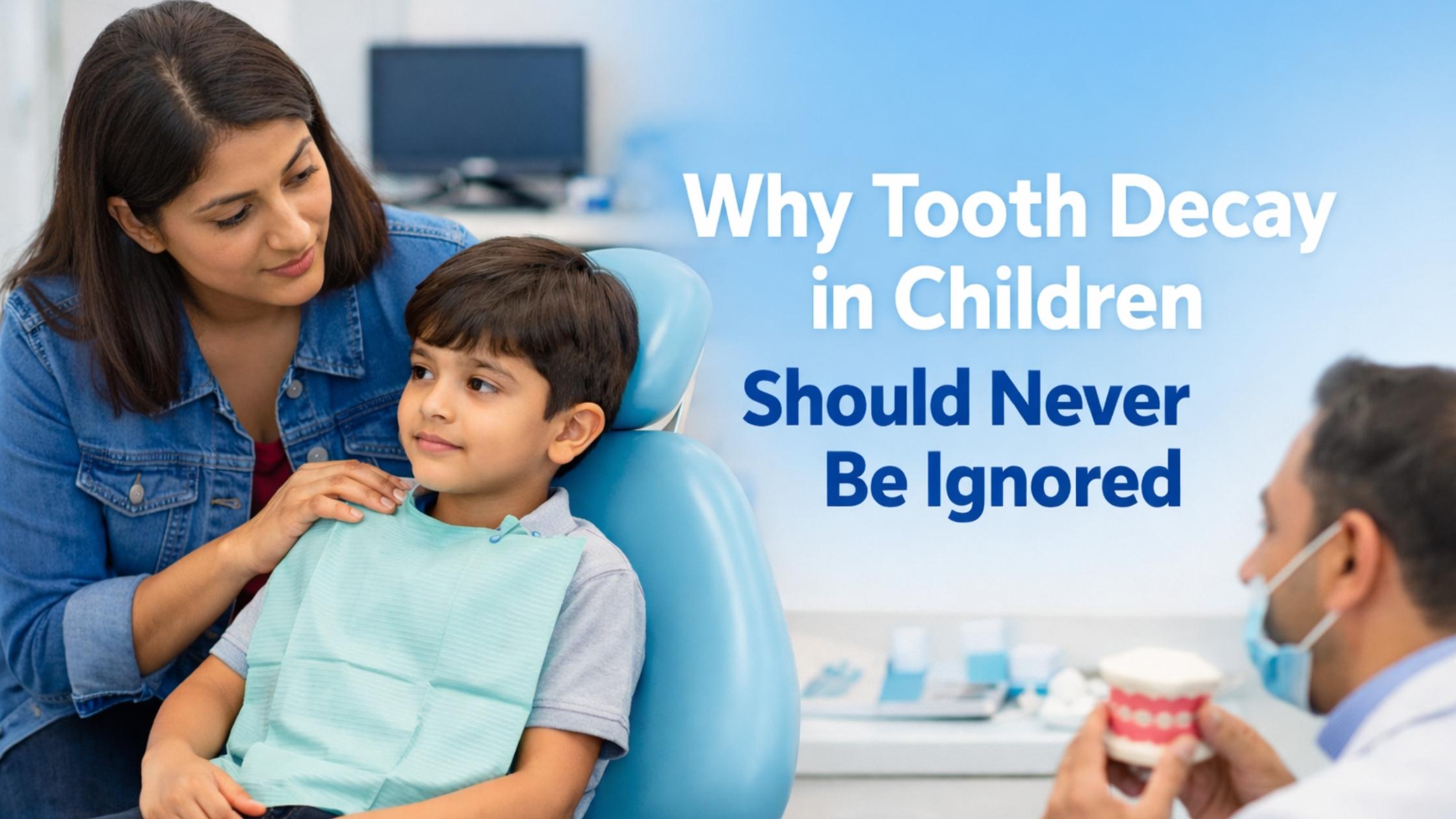
Why Tooth Decay in Children Should Never Be Ignored
Tooth decay is one of the most common dental problems in children, yet many parents believe it is not serious because it affects baby teeth. This is a dangerous misconception. Tooth decay in children can cause pain, infection, difficulty eating, poor speech development, and long-term dental problems if left untreated.
Parents in Indore often notice cavities only when their child complains of pain. By that time, the decay has usually progressed. Understanding the causes, prevention methods, and treatment options for tooth decay can help parents protect their child’s oral health early.
This guide explains everything parents need to know in clear and simple language.
What Is Tooth Decay in Children?
Tooth decay occurs when bacteria in the mouth produce acids that damage the tooth surface. These acids are formed when bacteria feed on sugars and starches from food and drinks.
In children, tooth decay often starts as small white or brown spots on the teeth. If untreated, it progresses into cavities and eventually causes infection and pain.
Both milk teeth and permanent teeth can be affected.
Why Tooth Decay Is Common in Children
Children are more prone to tooth decay because:
- Their enamel is thinner than adults
- They consume more sugary foods
- Oral hygiene habits are still developing
- Parents may underestimate the importance of baby teeth
Early prevention is essential to avoid long-term problems.
Common Causes of Tooth Decay in Children
1. Poor Oral Hygiene
Irregular brushing or improper brushing allows plaque to build up on teeth. Children often miss cleaning the back teeth and gum areas, where decay starts easily.
2. Frequent Sugary Foods and Drinks
Foods such as chocolates, biscuits, candies, cakes, and sugary drinks increase the risk of cavities. Frequent snacking keeps acid levels high in the mouth, damaging enamel continuously.
3. Bottle Feeding at Night
Allowing children to sleep with milk or juice bottles exposes teeth to sugar for long periods. This leads to a condition known as early childhood caries.
4. Lack of Fluoride Protection
Fluoride strengthens tooth enamel and prevents decay. Children who do not use fluoride toothpaste or drink fluoridated water may be at higher risk.
5. Late First Dental Visit
Many parents delay dental visits until pain occurs. Early dental checkups help detect decay before it becomes serious.
Signs of Tooth Decay in Children
Parents should watch for these warning signs:
- White or brown spots on teeth
- Visible holes or pits
- Tooth pain or sensitivity
- Difficulty chewing
- Bad breath
- Swollen gums near a tooth
Early signs may not cause pain, which is why regular dental checkups are important.
How Tooth Decay Affects a Child’s Health
Untreated tooth decay can lead to:
- Severe pain and discomfort
- Infection and abscess formation
- Difficulty eating and poor nutrition
- Speech problems
- Poor concentration in school
- Damage to developing permanent teeth
Healthy teeth are essential for a child’s growth and confidence.
Prevention of Tooth Decay in Children
Prevention is always better and easier than treatment.
1. Proper Brushing Habits
- Brush twice daily using fluoride toothpaste
- Parents should supervise brushing until age 7–8
- Use a soft-bristled toothbrush
- Clean all tooth surfaces gently
2. Healthy Diet Choices
- Limit sugary snacks and drinks
- Encourage fruits, vegetables, and dairy products
- Avoid frequent snacking
- Offer water instead of sweet beverages
3. Avoid Night-Time Bottle Feeding
- Do not allow children to sleep with milk or juice
- Encourage drinking water before bedtime
4. Regular Dental Checkups
Children should visit a dentist:
- By their first birthday or first tooth eruption
- Every 6 months thereafter
Early visits help prevent cavities and build dental comfort.
5. Preventive Dental Treatments
Dentists may recommend:
- Fluoride applications
- Dental sealants for molars
These treatments provide extra protection against cavities.
Treatment Options for Tooth Decay in Children
Treatment depends on the severity of decay.
1. Fluoride Treatment
For early decay, fluoride strengthens enamel and stops cavity progression.
2. Dental Fillings
If cavities are present, fillings restore the tooth and prevent further damage.
3. Pulp Therapy (Child Root Canal)
If decay reaches the nerve, pulp treatment helps save the tooth and relieve pain.
4. Tooth Extraction (When Necessary)
In severe cases where the tooth cannot be saved, extraction may be required. Space maintainers may be used to protect future teeth alignment.
Are Milk Teeth Really Important?
Yes. Milk teeth:
- Help children chew and speak properly
- Maintain space for permanent teeth
- Guide jaw development
Ignoring decay in milk teeth can damage permanent teeth and cause alignment problems later.
Cost of Treating Tooth Decay in Children in Indore
Treatment cost depends on:
- Extent of decay
- Type of treatment required
- Number of teeth involved
Early treatment is always simpler, less painful, and more affordable.
When Should Parents Visit a Dentist in Indore?
Parents should consult a dentist if:
- Any discoloration or cavity is noticed
- The child complains of tooth pain
- Gums appear swollen or bleeding
- The child avoids eating due to pain
Early care prevents serious complications.
Frequently Asked Questions (FAQs)
Q1. Can tooth decay in children heal on its own?
No. Tooth decay does not heal without dental treatment.
Q2. Is fluoride toothpaste safe for children?
Yes, when used in the recommended amount.
Q3. How often should children visit the dentist?
Every six months for preventive care.
Q4. Can cavities spread from one tooth to another?
Yes. Bacteria can spread and affect nearby teeth.
Book a Pediatric Dental Consultation in Indore
Protect your child’s smile with timely dental care and preventive treatment.
Smile Centre by Dr. Paridhi Jain
📍 Genesis Cosmetology, E-86, LIG Link Rd, Shree Nagar Ext, Pushpa Nagar, Anurag Nagar, Indore – 452011
📞 Call: 062622 18187
🌐 Website: https://smilecentreindore.com
⭐ 5.0 rating | 31 Google reviews
🕒 Open till 8 PM
Early dental care today ensures a healthy smile for your child tomorrow.